← 返回线下交流 · 课件馆
ENT Pediatric Anesthesia Self-Guided Course 面向 Cornell 大一见习学生的中英双语自学课件 Bilingual self-guided course for a first-year Cornell student observer

Self-Guided ENT OR Observation

耳鼻喉科手术麻醉:共用气道与儿童注意事项 ENT Anesthesia: Shared Airway and Pediatric Considerations

这套课件给学生自己看:用明天 9 岁和 7 岁儿童的腺样体、扁桃体、喉部和声带相关手术,理解 ENT 麻醉最重要的概念:麻醉医生和外科医生共用同一条气道。 This course is designed for independent reading: use tomorrow's 9-year-old and 7-year-old pediatric ENT cases to understand the core idea of ENT anesthesia: the anesthesiologist and surgeon work around the same airway.

ENT 耳鼻喉科手术 otolaryngology surgery
7 / 9 儿童患者年龄 pediatric patient ages
11 英文标识教学图 English-labeled figures
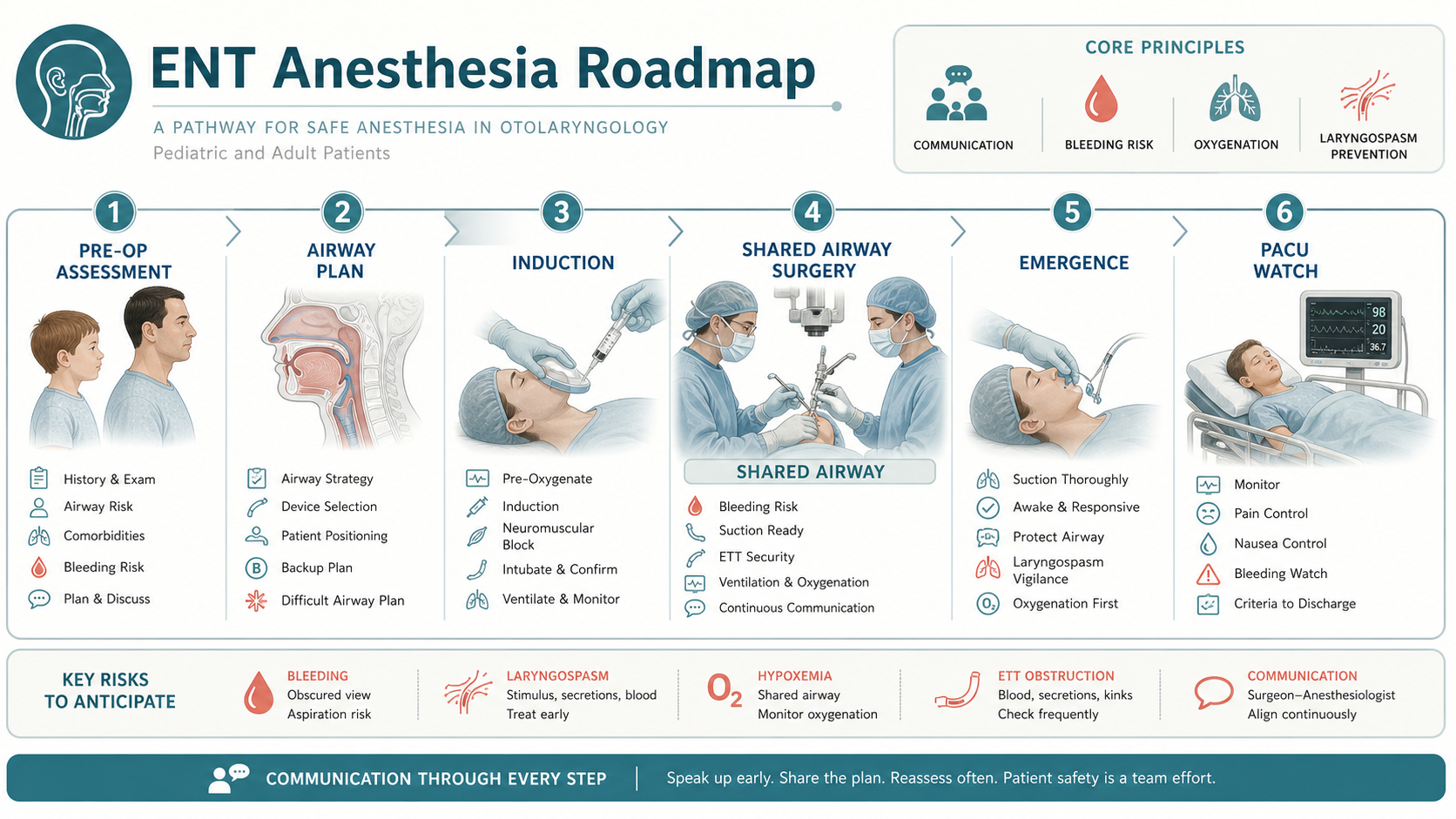
ENT anesthesia roadmap
先看总路线:术前评估、气道计划、诱导、共用气道手术、苏醒和 PACU 观察。 Start with the roadmap: pre-op assessment, airway plan, induction, shared-airway surgery, emergence, and PACU monitoring.

Start Here

ENT 麻醉第一句话:气道既是生命线,也是手术区域First Principle: The Airway Is Both Lifeline and Surgical Field

大多数手术里,麻醉医生管理气道,外科医生在其他部位操作。但耳鼻喉科手术常常不同:手术位置就在鼻咽、口咽、喉或声门附近。麻醉医生需要保证氧合和通气,外科医生需要清楚的手术视野,两者必须持续沟通。

In many operations, anesthesia manages the airway while the surgeon works elsewhere. ENT surgery is different: the surgical field may be in the nasopharynx, oropharynx, larynx, or glottis. The anesthesia team must maintain oxygenation and ventilation, while the surgeon needs access and visibility. Communication is not optional.
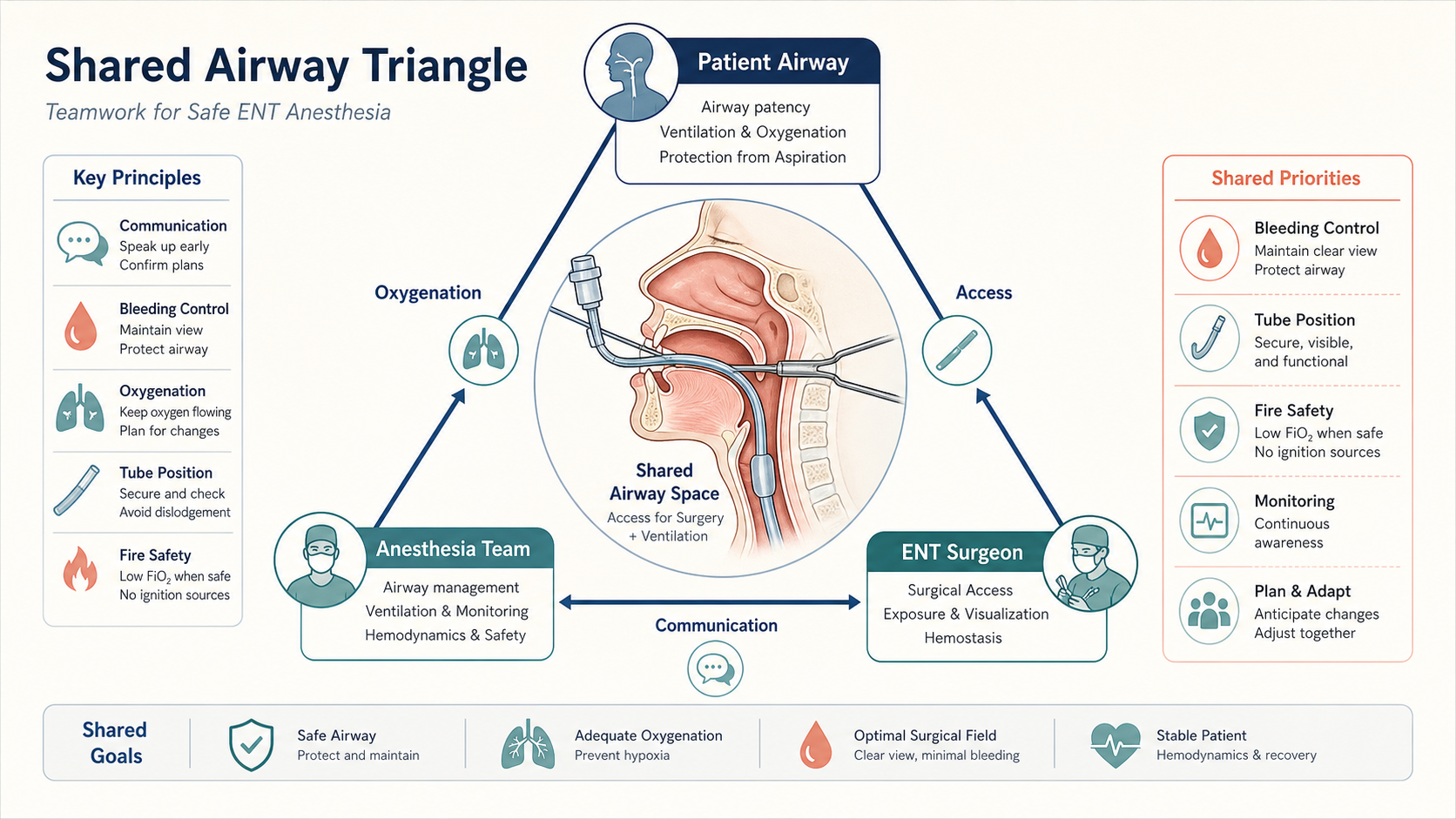
Shared airway Oxygenation Bleeding Laryngospasm Smooth emergence
Shared airway triangle
这张图是本课最重要的概念图:患者气道、ENT 外科医生、麻醉团队构成一个三角关系。 This is the central concept figure: patient airway, ENT surgeon, and anesthesia team form a working triangle.

ENT Anesthesia Features

耳鼻喉科手术麻醉的特点What Makes ENT Anesthesia Different?
Shared airway 气道管理和手术操作在同一空间发生。 Airway management and surgery happen in the same space.
Bleeding and secretions 口咽或鼻咽出血、分泌物可能影响视野和气道。 Blood or secretions can affect the field and airway.
Reactive airway 喉部刺激可引发咳嗽、屏气、喉痉挛或低氧。 Laryngeal stimulation may trigger coughing, breath-holding, laryngospasm, or hypoxemia.
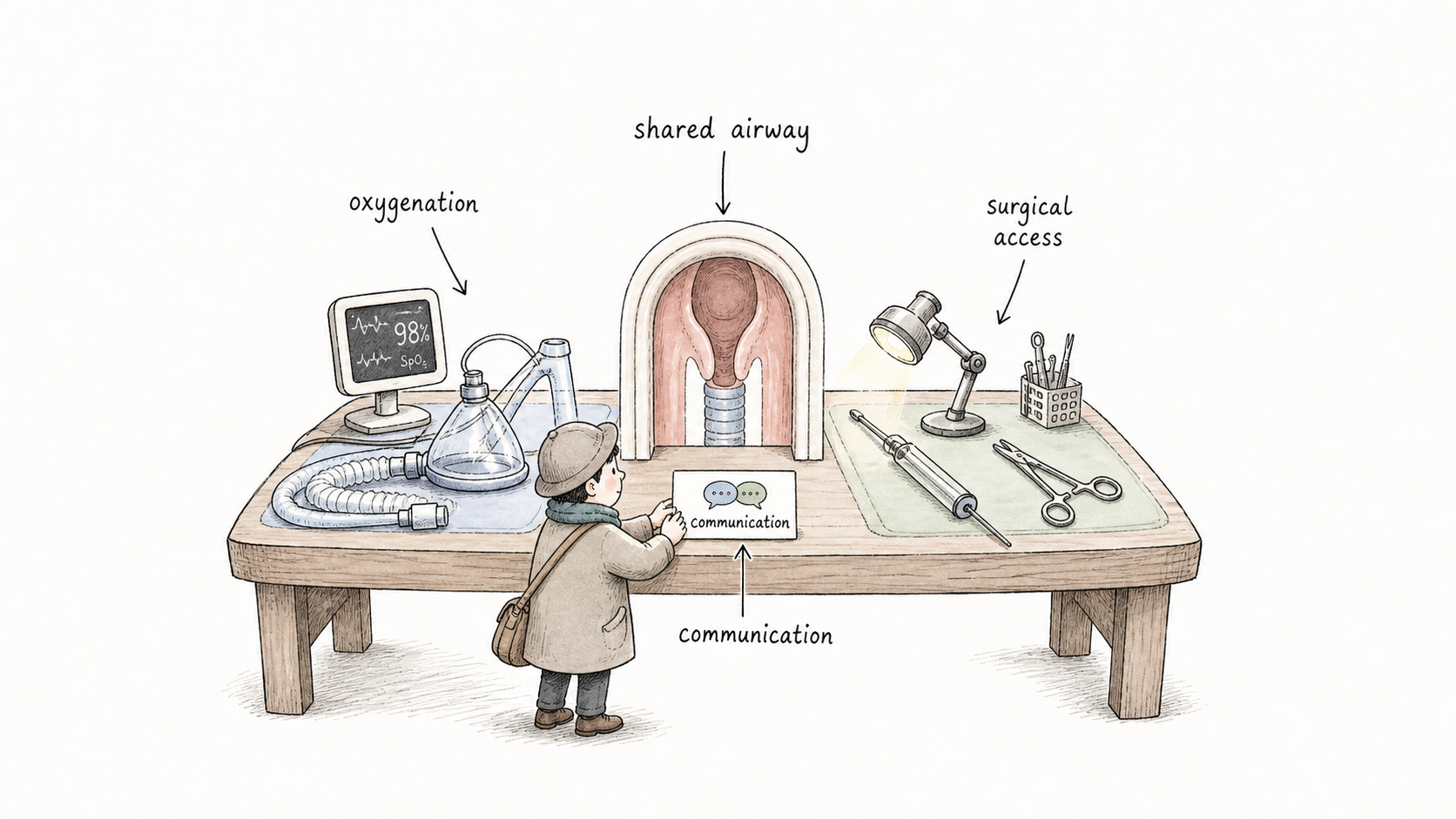
Shared airway hand-drawn table metaphor
手绘图把 shared airway 解释成一张小桌子:麻醉和外科都要用,但空间有限,所以沟通要放在中间。 The hand-drawn figure explains the shared airway as a small table: both teams need it, space is limited, and communication sits in the middle.

Tomorrow's Cases

明天手术内容:先建立解剖定位Tomorrow's Procedures: Build the Anatomy Map First

这几类手术都在上气道附近,但位置不同,麻醉关注点也不同。学生可以先问自己:病变在鼻咽、口咽、喉入口,还是声门?它会不会影响通气、插管、出血、苏醒?

These cases all sit near the upper airway, but the exact location changes the anesthesia focus. Ask: is the lesion in the nasopharynx, oropharynx, laryngeal inlet, or glottis? Could it affect ventilation, intubation, bleeding, or emergence?
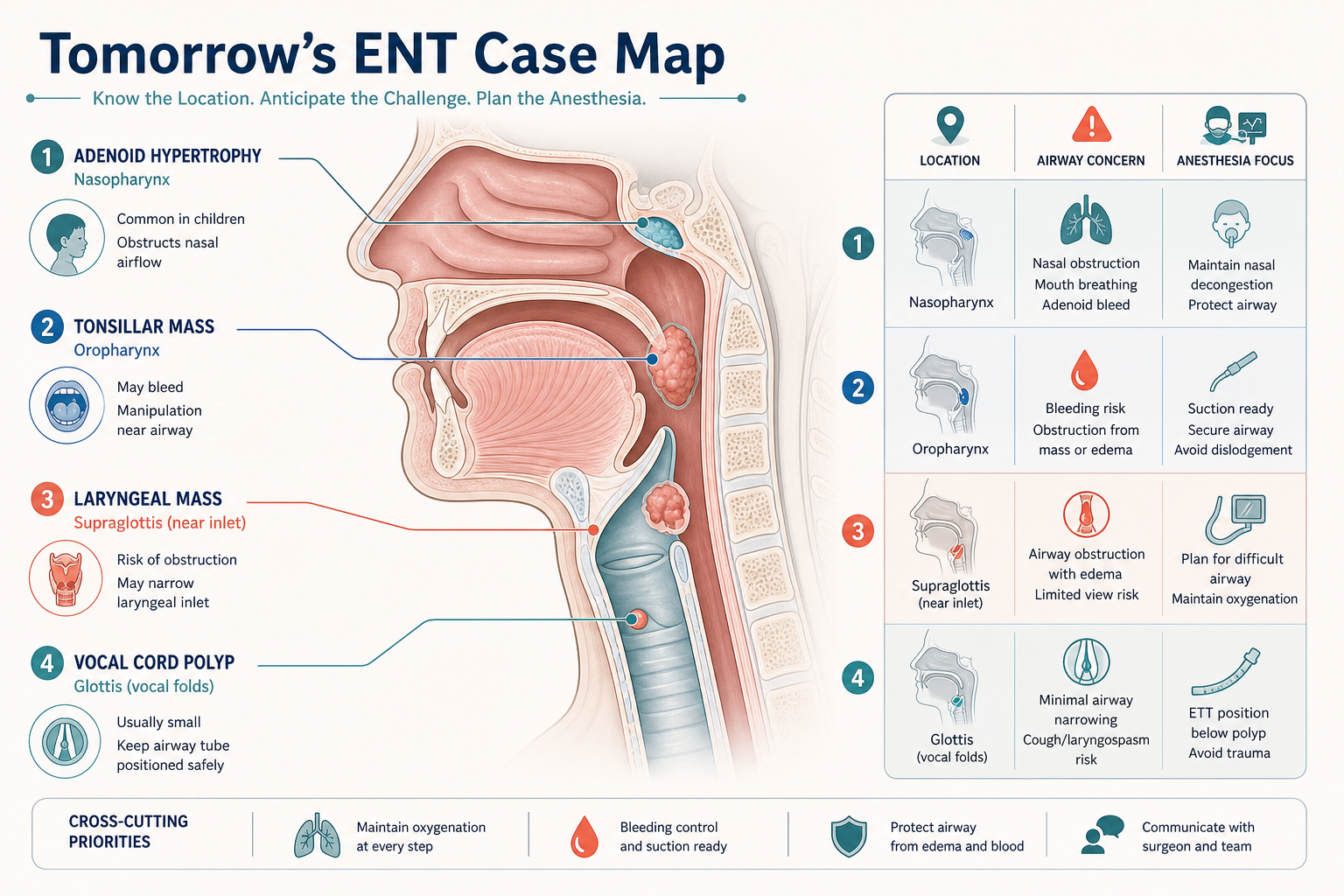
Adenoid hypertrophy 腺样体肥大,重点看鼻咽阻塞、张口呼吸、打鼾和 OSA 风险。 Focus: nasopharyngeal obstruction, mouth breathing, snoring, and OSA risk.
Tonsillar mass 扁桃体肿物,重点看口咽空间、出血、误吸和术后疼痛。 Focus: oropharyngeal space, bleeding, aspiration concern, and post-op pain.
Laryngeal mass 喉肿物,重点看气道狭窄、插管路径、术后水肿和备用气道方案。 Focus: airway narrowing, tube passage, post-op edema, and backup airway plan.
Vocal cord polyp 声带息肉,重点看声门水平操作、小号导管、避免咳嗽和保护声带。 Focus: glottic-level surgery, small tube, cough avoidance, and vocal fold protection.
Tomorrow's ENT case map
这一张图帮助学生把四个中文诊断和英文解剖位置连起来。 This figure helps connect the four clinical labels with their English anatomy locations.

Pediatric vs Adult

9 岁和 7 岁儿童:不是“小号成人”Children Are Not Just Small Adults

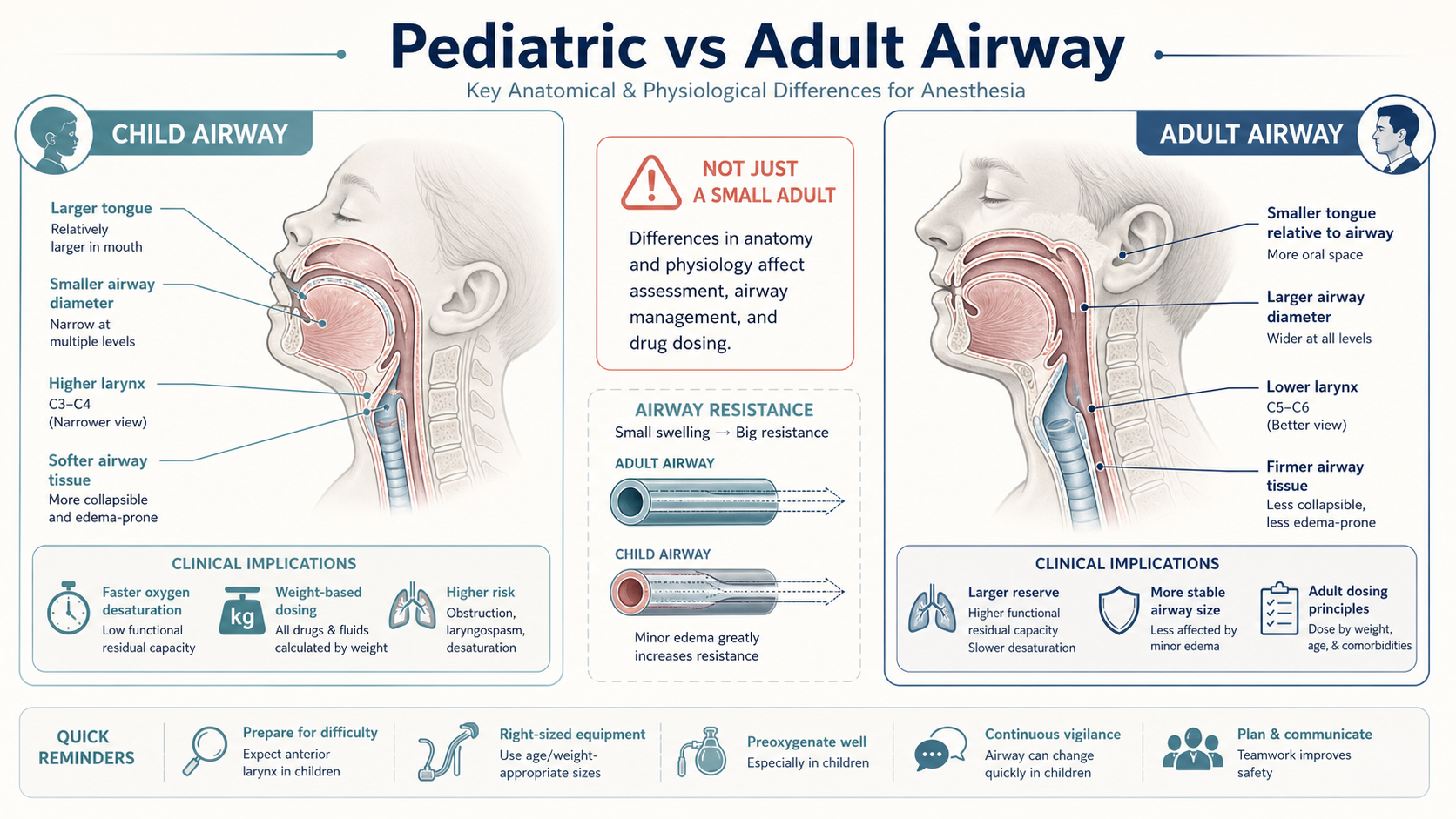
儿童气道更小,轻微水肿或分泌物就可能造成更明显阻力;儿童耗氧快、氧储备相对少,诱导、插管、拔管和苏醒期都更容易出现低氧。对 7 岁和 9 岁儿童,解剖差异比婴幼儿小一些,但 ENT 手术仍然会把风险集中到气道上。

Children have smaller airways, so mild swelling or secretions can create a larger increase in resistance. They also desaturate faster because oxygen reserve is limited relative to demand. In 7- and 9-year-old children, the differences are less dramatic than in infants, but ENT surgery still concentrates risk around the airway.
学生记忆句:儿童 ENT 麻醉最怕的不是“手术小”,而是“小气道 + 气道手术 + 苏醒刺激”。 Memory line: pediatric ENT anesthesia is not low attention just because the surgery is small; the issue is small airway + airway surgery + emergence stimulation.
Pediatric versus adult airway infographic
对比儿童和成人气道:空间、氧储备、设备型号和药物剂量都要重新思考。 Compare pediatric and adult airways: space, oxygen reserve, equipment size, and drug dosing all need pediatric thinking.
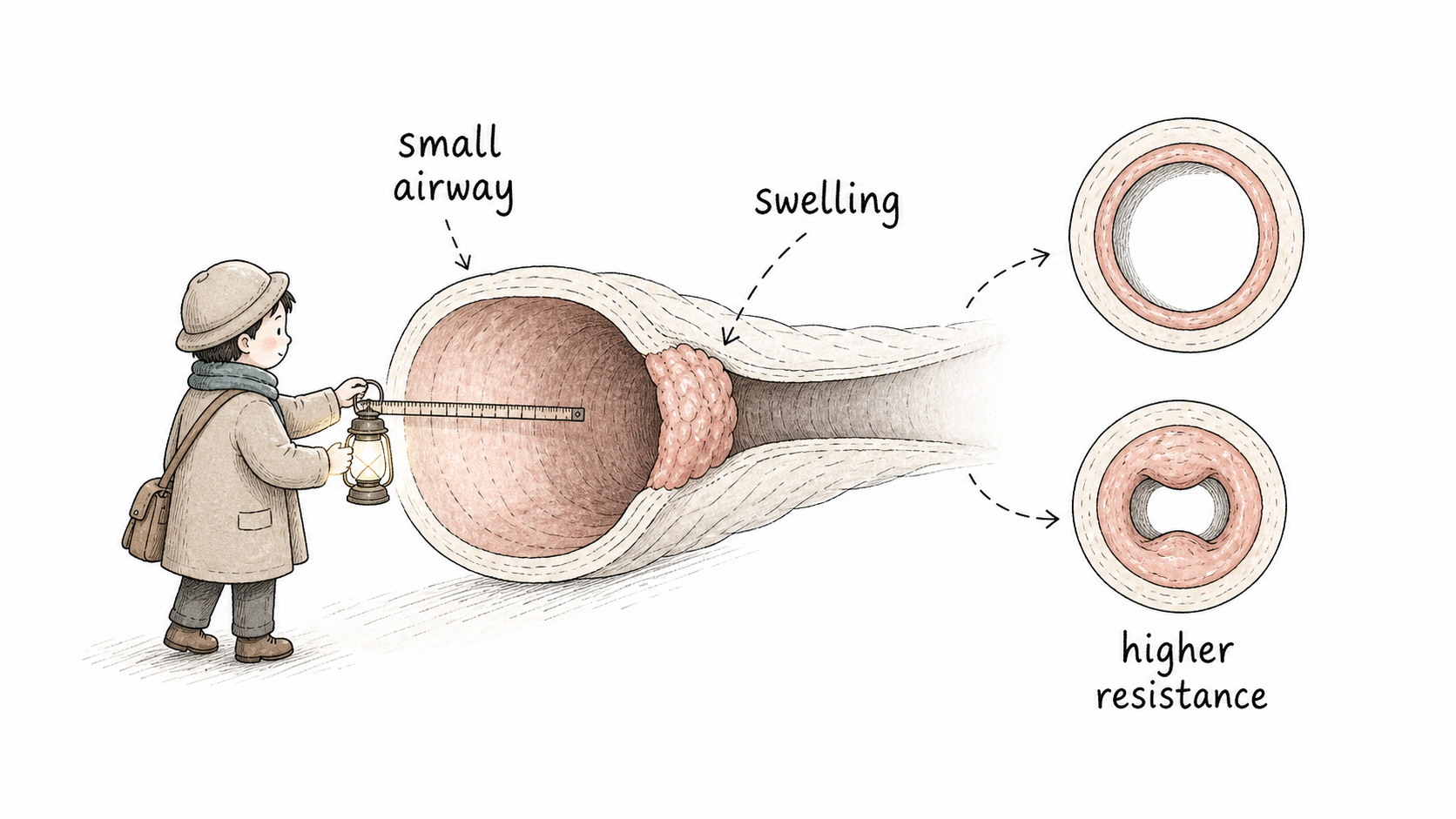
Small airway tunnel hand-drawn metaphor
手绘图用“狭窄隧道”解释:同样一点肿胀,在小气道里影响更大。 The tunnel metaphor shows why the same swelling matters more in a smaller airway.

Adenoid Hypertrophy and OSA

腺样体肥大:从打鼾到围术期气道风险Adenoid Hypertrophy: From Snoring to Perioperative Airway Risk

腺样体肥大可导致鼻咽阻塞、张口呼吸、打鼾,部分儿童伴阻塞性睡眠呼吸暂停 `OSA`。这会影响术前评估、阿片类镇痛谨慎程度、苏醒期气道观察和 PACU 监测。

Adenoid hypertrophy may cause nasopharyngeal obstruction, mouth breathing, snoring, and sometimes obstructive sleep apnea (OSA). This affects pre-op assessment, opioid caution, emergence planning, and PACU monitoring.
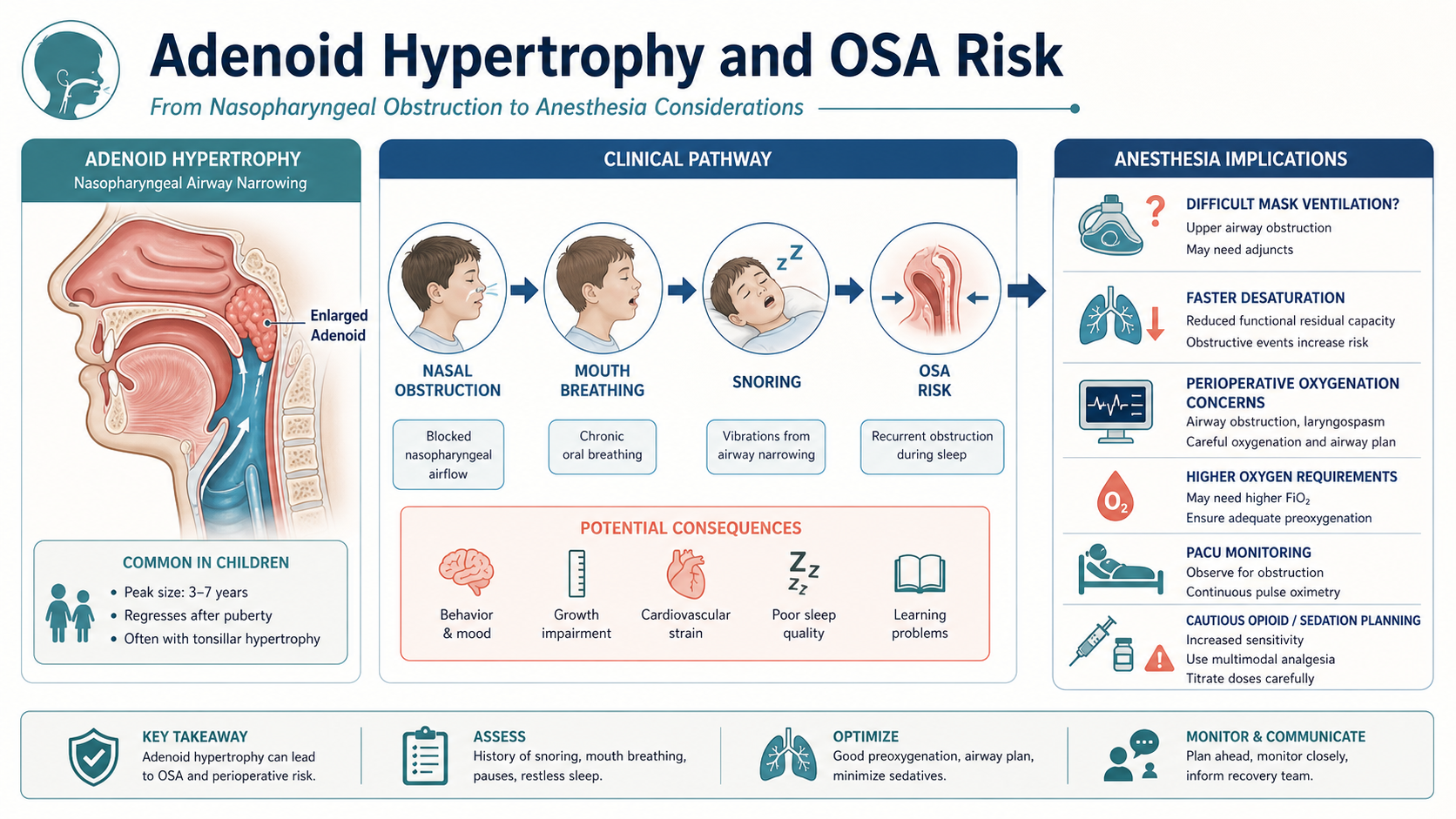
Adenoid hypertrophy and OSA risk
重点不是只记住“腺样体大”,而是理解它如何改变氧合、通气和术后观察。 The goal is not just to remember enlarged adenoids, but to understand how they change oxygenation, ventilation, and recovery monitoring.

Lesions and Vocal Cord Polyp

扁桃体肿物、喉肿物、声带息肉:同样是气道,风险不同Tonsil, Larynx, Vocal Cord: Same Airway, Different Risk Profile

扁桃体肿物主要影响口咽空间和出血风险;喉肿物更接近关键气道入口,可能影响插管和通气;声带息肉位于声门水平,手术常需要更好的显露和更平稳的苏醒,减少咳嗽和声带刺激。

A tonsillar mass mainly affects oropharyngeal space and bleeding risk. A laryngeal mass is closer to the critical airway inlet and may affect intubation or ventilation. A vocal cord polyp sits at the glottic level, where exposure and smooth emergence matter to reduce coughing and vocal fold irritation.
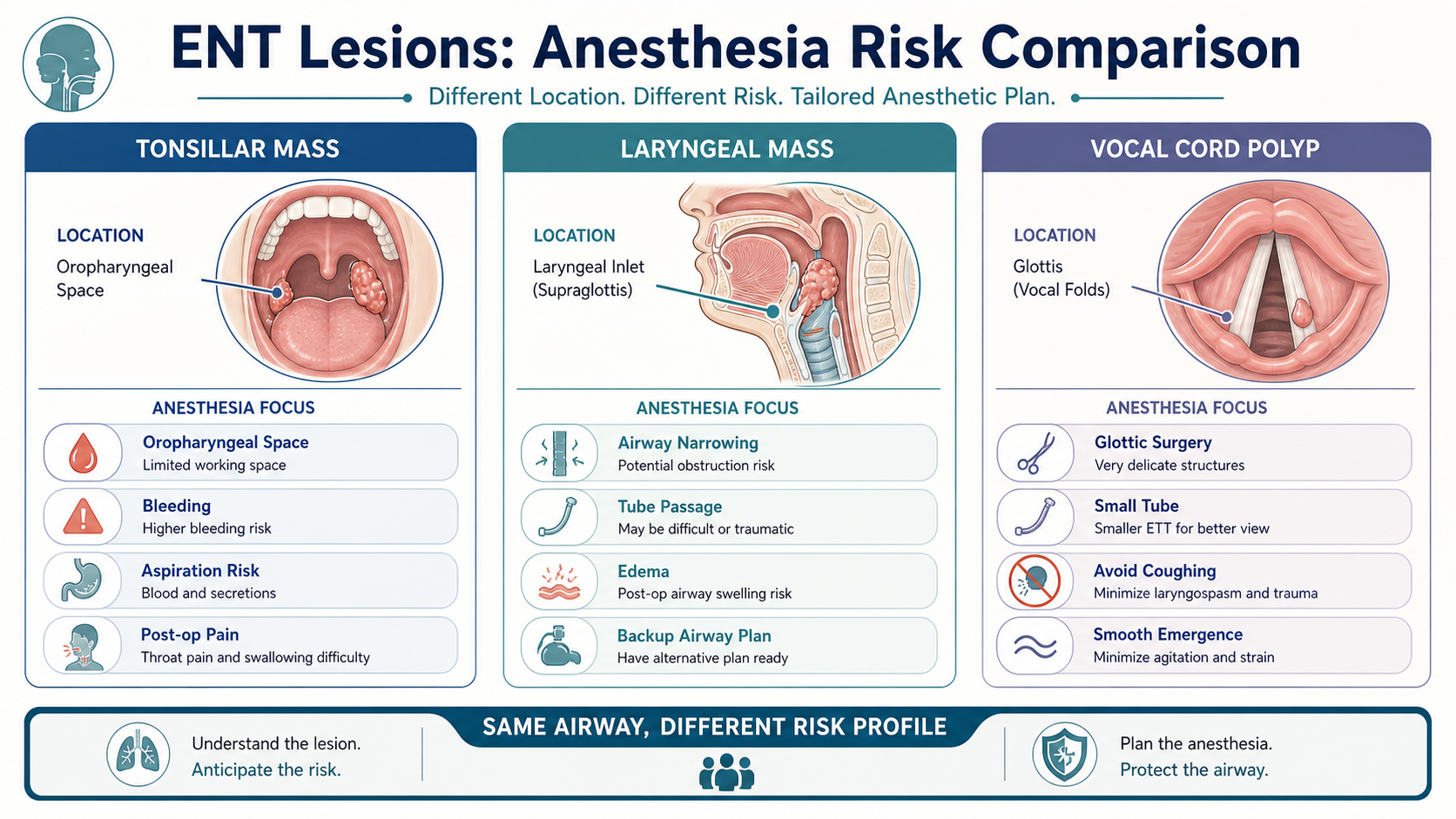
ENT lesion anesthesia risk comparison
这张对比图适合术前看:同样是 ENT,全麻计划的重点会随位置改变。 This comparison is useful before the case: the anesthesia plan changes with lesion location.

General Anesthesia Workflow

儿童 ENT 全麻流程:从预氧合到 PACUPediatric ENT General Anesthesia: From Preoxygenation to PACU

典型观察顺序包括:确认禁食、评估上呼吸道感染和 OSA 风险、预氧合、诱导、建立静脉通路和气道、固定导管、手术期间持续沟通、平稳苏醒、PACU 观察。具体药物和气道方式应由麻醉医生根据患者与手术决定。

A practical observation sequence is: confirm fasting, screen for URI and OSA risk, preoxygenate, induce anesthesia, establish IV and airway, secure the tube, communicate during surgery, aim for smooth emergence, and monitor in PACU. Specific drugs and airway choices are clinician- and case-dependent.
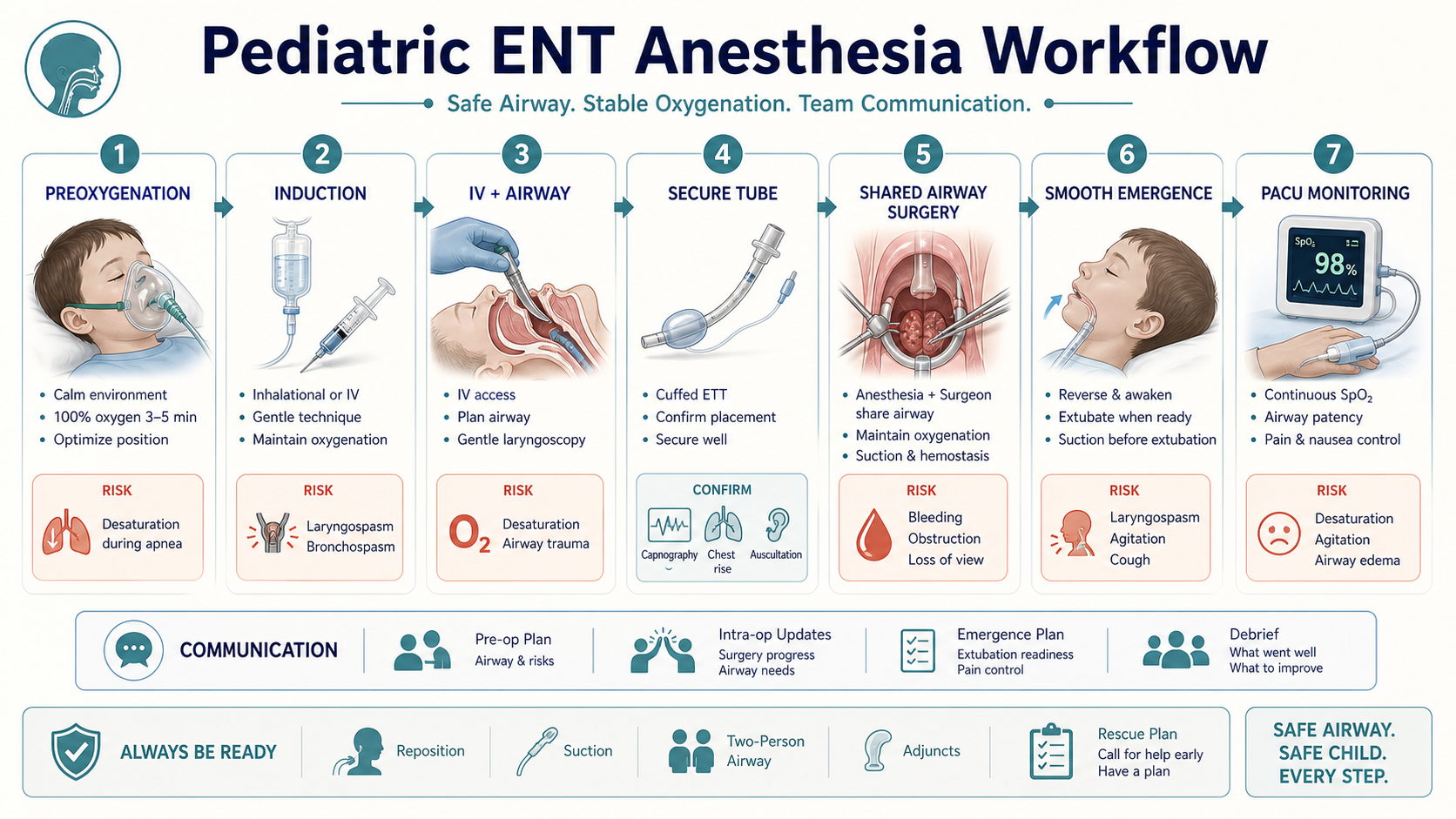
Pediatric ENT anesthesia workflow
学生可以按图中顺序观察:每一步麻醉团队为什么这么做? Observe in this order: why does the anesthesia team do each step?

Emergence Risk

苏醒期不是“结束”,而是高注意力过渡Emergence Is Not the End; It Is a High-Attention Transition

ENT 儿童手术苏醒期要特别关注:喉痉挛、咳嗽、低氧、出血、分泌物、躁动、疼痛和恶心。拔管时机、吸引、镇痛、止吐和 PACU 交接都影响安全。

During emergence after pediatric ENT surgery, watch for laryngospasm, coughing, hypoxemia, bleeding, secretions, agitation, pain, and nausea. Extubation timing, suctioning, analgesia, antiemesis, and PACU handoff all matter.
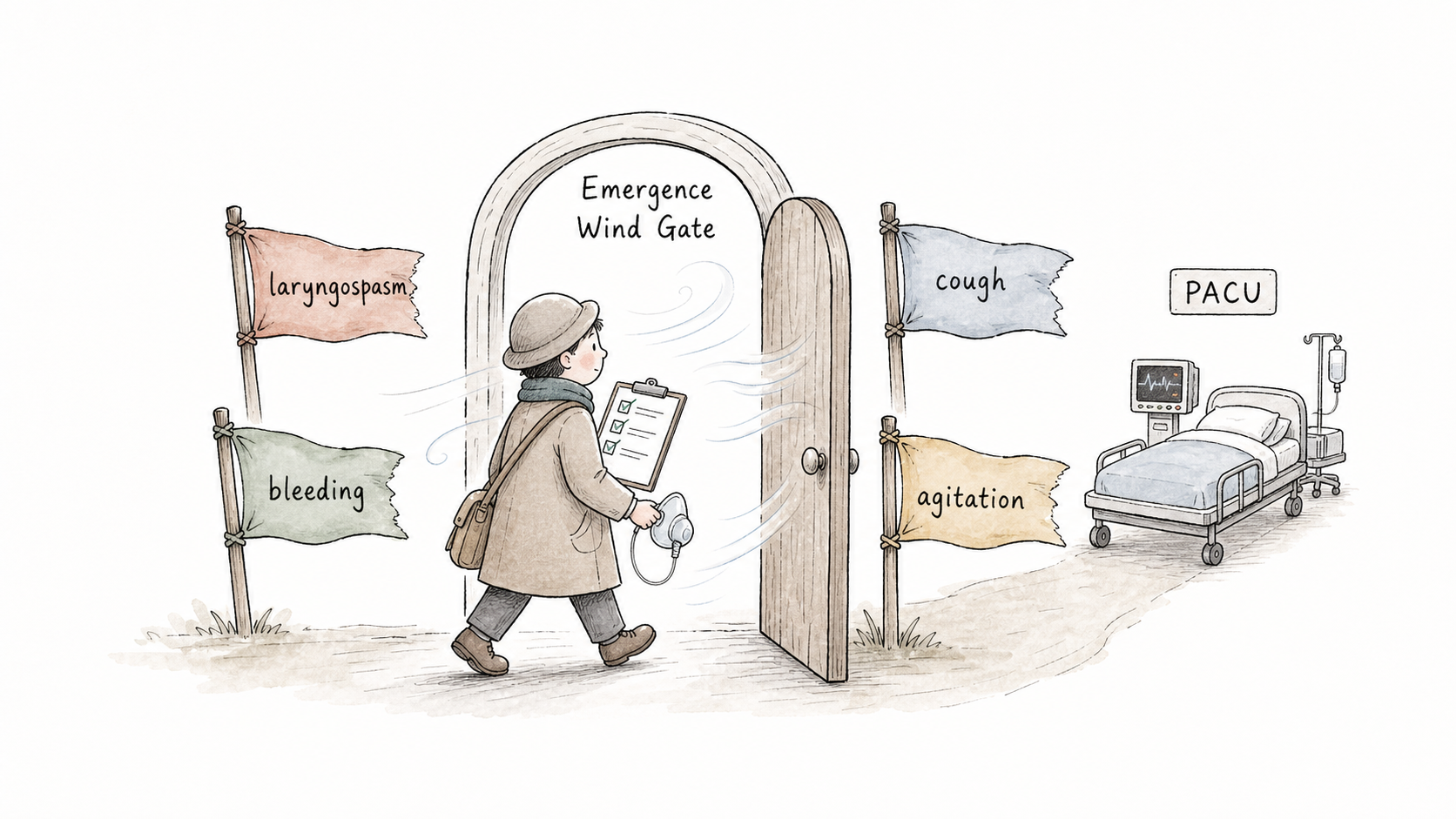
Emergence wind gate hand-drawn metaphor
这张图把苏醒期画成“风口”:病人快醒了,但麻醉医生反而更需要集中注意力。 This figure draws emergence as a wind gate: the patient is waking up, but the anesthesia team must stay highly focused.

Student Observation Route

学生自己怎么观察:六个节点How to Observe Independently: Six Checkpoints
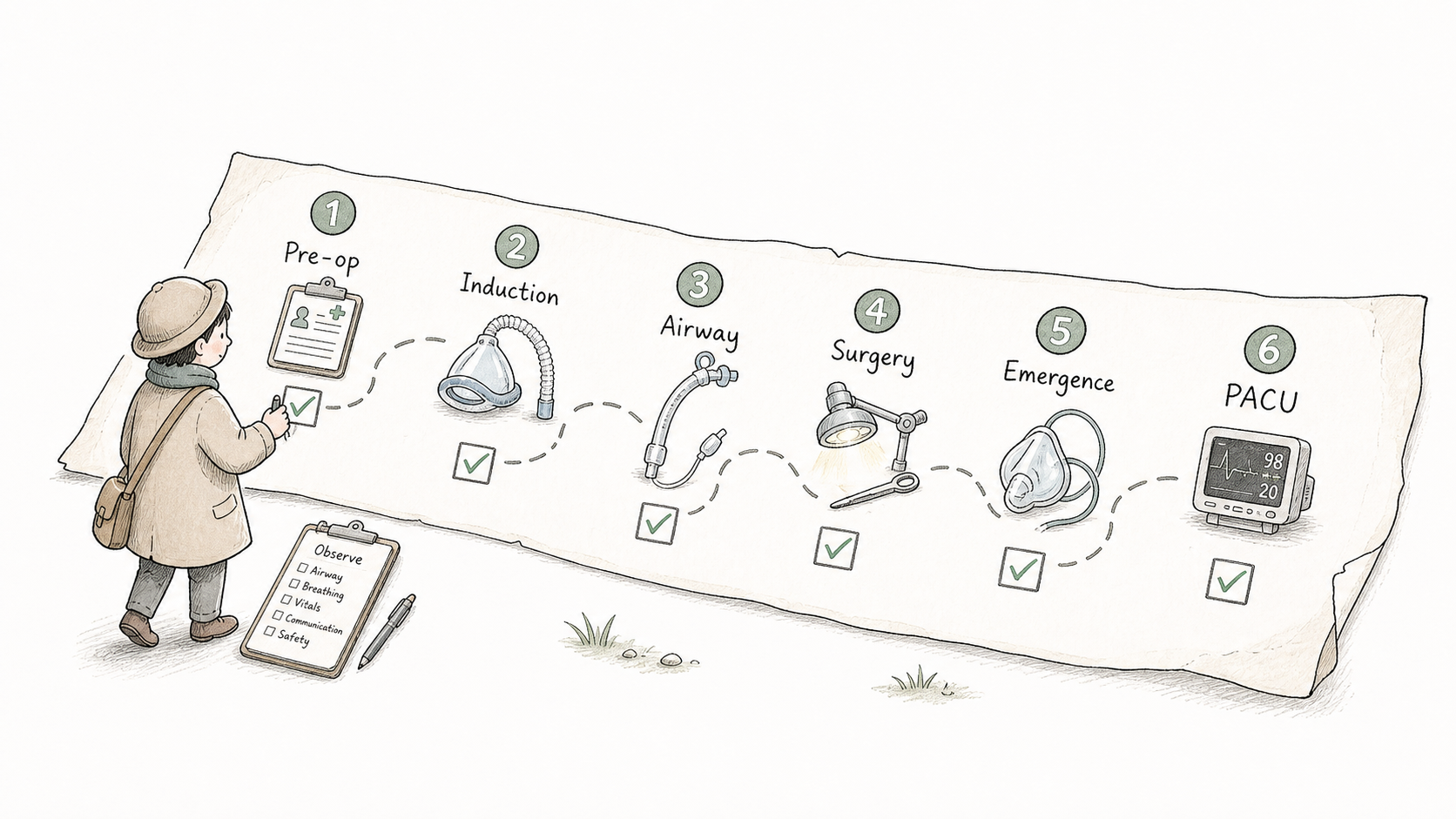
Pre-op 年龄、体重、禁食、上呼吸道感染、OSA、打鼾、过敏、既往麻醉史。 Age, weight, fasting, URI, OSA, snoring, allergies, previous anesthesia history.
Induction 如何预氧合?儿童如何安抚?诱导后通气是否稳定? How is preoxygenation done? How is the child reassured? Is ventilation stable after induction?
Airway 气管导管型号如何选择?固定后如何确认位置? How is tube size chosen? How is tube position confirmed after securing?
Surgery 外科什么时候需要更多空间?麻醉什么时候需要暂停或调整? When does surgery need more space? When does anesthesia need a pause or adjustment?
Emergence 拔管前是否吸引?咳嗽、喉痉挛、低氧、躁动如何处理? Is suctioning done before extubation? How are coughing, laryngospasm, hypoxemia, and agitation managed?
PACU 交接包括气道事件、出血、镇痛、止吐、SpO2 和观察重点。 Handoff includes airway events, bleeding, analgesia, antiemesis, SpO2, and monitoring priorities.
Student observation route
这张图适合学生术前保存:进入手术室后,就按这六站观察。 This figure is useful before entering the OR: follow these six stations during observation.

Check Yourself

术后五个自测问题Five Post-Case Self-Check Questions

看完病例后,用 2 分钟回答:这台手术的病变位置在哪里?麻醉和外科如何共用气道?儿童和成人气道最大的不同是什么?为什么腺样体肥大要想到 OSA?苏醒期最需要警惕哪些问题?

After the case, answer in two minutes: Where was the lesion? How did anesthesia and surgery share the airway? What is the most important pediatric-versus-adult airway difference? Why does adenoid hypertrophy raise OSA concern? What are the key emergence risks?

核心句:ENT anesthesia is airway teamwork under time pressure. Core line: ENT anesthesia is airway teamwork under time pressure.
← 返回线下交流 · 课件馆